ServicesCrowns & Bridges
Crowns & Bridges in Webster
A crown covers a tooth that is too cracked or filled to hold up on its own. A bridge fills the space left by a missing tooth. We explain which one fits your mouth and why, then make it to match your bite and shade.
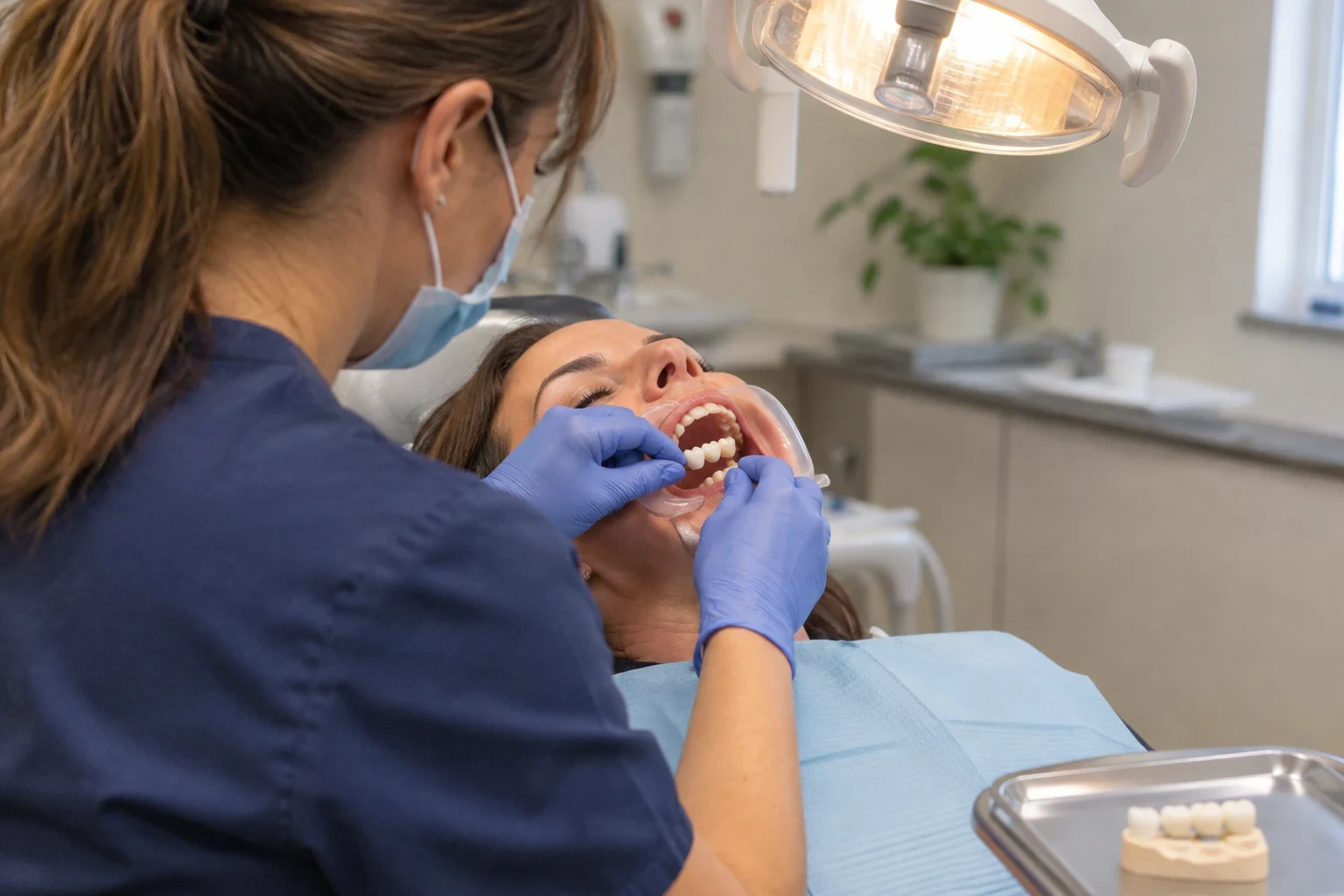
When a tooth needs more than a filling
Fillings are meant to replace a small section of tooth. After a large cavity, an aging amalgam filling, a crack or a root canal, there may be too little natural structure left, and the thin walls that remain can bend and fracture when you chew. A crown fits over the entire visible tooth, bracing those walls and distributing biting force evenly.
Bridges address something else: a tooth that is already gone. Left open, the space lets nearby teeth tilt inward, and the tooth above or below can slowly extend out of its socket, shifting how your teeth meet. A bridge places crowns on the teeth bordering the space and suspends a replacement tooth, known as a pontic, between them.
We care for each patient the way we would care for someone on our own street. That means showing you the X-rays and photos, telling you honestly whether a filling will still hold or a crown is really needed, and putting the treatment plan in writing before we begin.
What your crown or bridge includes
Exam and X-rays
We look at the crown of the tooth, the root below it and the supporting bone. A restoration is only as sound as what it sits on, so any decay or infection is treated before we go further.
The right material for that tooth
Zirconia stands up well to the heavy chewing load on molars. Lithium disilicate and layered porcelain let light through much like enamel does, which suits front teeth. We explain the tradeoff for your specific tooth.
Shaping and impressions
The tooth is reduced just enough for the crown to have proper thickness. Then we record the margins, where the crown will meet the tooth, along with how your upper and lower teeth come together.
A temporary crown
A temporary goes on the same day to shield the prepared tooth and hold the spacing with the teeth around it while the lab builds your final restoration.
Fit, bite check and cementing
We confirm the margins and the contacts on each side, then use marking paper to find any high spots and smooth them so your bite feels normal before the crown is cemented.
Signs it may be time for a crown or bridge
Sharp pain when you bite and release
A quick jolt of pain as you let go of a bite often means a cusp has cracked. A crown holds the tooth together and can stop the crack from traveling toward the root.
An oversized or breaking filling
Once a filling fills most of the tooth, the walls around it are thin and fragile. Swapping it for another large filling tends to shift the weak point rather than fix it.
A tooth that had a root canal
Molars and premolars become more brittle after root canal treatment, so they are usually crowned to keep them from fracturing.
An empty space where a tooth was
Food catching in a gap or teeth beginning to tip are clues that the spacing is changing. A bridge keeps teeth in position and brings back chewing on that side.
Teeth worn down or chipped
Years of grinding can shorten teeth and leave them sensitive. Crowns restore the height and shape that wear has removed.
How the visits go
- 1
Consultation and plan
We take X-rays, look closely at the tooth and lay out your choices in everyday language. You leave with a written treatment plan that lists every step so you can decide without pressure.
- 2
Preparation visit
Once the area is numb, we clear any decay, shape the tooth and take impressions. The shade is matched to the teeth beside it under natural light, and a temporary is placed.
- 3
Lab fabrication
A dental lab builds your crown or bridge from the impression, which usually takes a couple of weeks. We tell you which foods to skip while the temporary is on.
- 4
Seating visit
The temporary comes off and we try in the final piece, checking fit and bite before cementing it. Once the numbness fades, most patients eat as usual.
What sets the price of a crown or bridge
Every tooth arrives with its own history, so we quote your crown or bridge after the exam and break each charge out line by line in a written treatment plan. We accept most dental insurance plans and will sit down with you to read how your benefits treat major restorative work. If you are uninsured, our Office Dental Plan for patients without insurance is one option to ask about. Another is spreading payments over time with the CareCredit Patient Payment Plan.
- Single crown versus bridge
- A crown restores one tooth. A three-unit bridge is two crowns and a pontic milled or cast as a single piece, so the lab fee is higher and the appointments run longer.
- Choice of material
- Zirconia, lithium disilicate, porcelain fused to metal and gold each carry a different lab cost. Which one we suggest depends on the tooth's position and how hard you bite or grind.
- Groundwork before the crown
- When decay has taken most of the tooth, a core buildup may be needed to give the crown something solid to grip. Gum disease or an infected root gets treated first, because cementing over either problem shortens the life of the restoration.
- How your plan covers it
- Most insurance plans put crowns and bridges in a major-services tier with a lower coverage percentage and a yearly cap. We check those limits with you so your out-of-pocket share is clear before any work starts.
Common questions about crowns and bridges
Something not covered here? (508) 938-8976
Does getting a crown hurt?
Before any shaping starts, we make sure the tooth and the gum around it are fully numb and check with you that nothing is sharp. During preparation you will mostly feel vibration and some pressure. The gum tissue can be a little sore for a day or two after, and an ordinary over-the-counter pain reliever usually handles it.
How long does a crown last?
That comes down to the material, whether you clench or grind at night, and how well the crown margin is kept clean. New decay usually begins at the seam where crown meets tooth near the gumline. Careful brushing and flossing along that edge, along with regular exams and cleanings, do the most to make a crown last.
Will the teeth next to my gap have to be crowned for a bridge?
Yes, for a traditional bridge, since the abutment teeth on either side carry the pontic. If those teeth already hold large fillings, crowning them can strengthen them. If they are healthy and untouched, we explain what reshaping them involves so the choice is yours.
What if my temporary crown comes off?
Temporaries are held with a weaker cement on purpose, so they lift off cleanly at the next visit, and now and then one lets go too soon. Keep the temporary, chew on the opposite side and phone our office so we can recement it. A prepared tooth left uncovered can get sensitive or shift slightly, which affects how the final crown fits.
Can you match the crown to my other teeth?
We hold shade tabs up to the neighboring teeth and send the lab notes on color, translucency and surface texture. If you plan on teeth whitening, finish it before the crown is made. Porcelain and zirconia keep the color they were made in and will not lighten with bleach.

Talk through your tooth with us
Give our Webster office a call and we will set up a time to look at the tooth, explain whether a crown, a bridge or a simpler fix makes sense, and go over your insurance or financing.