ServicesExams & Cleanings
Exams & Cleanings in Webster, MA
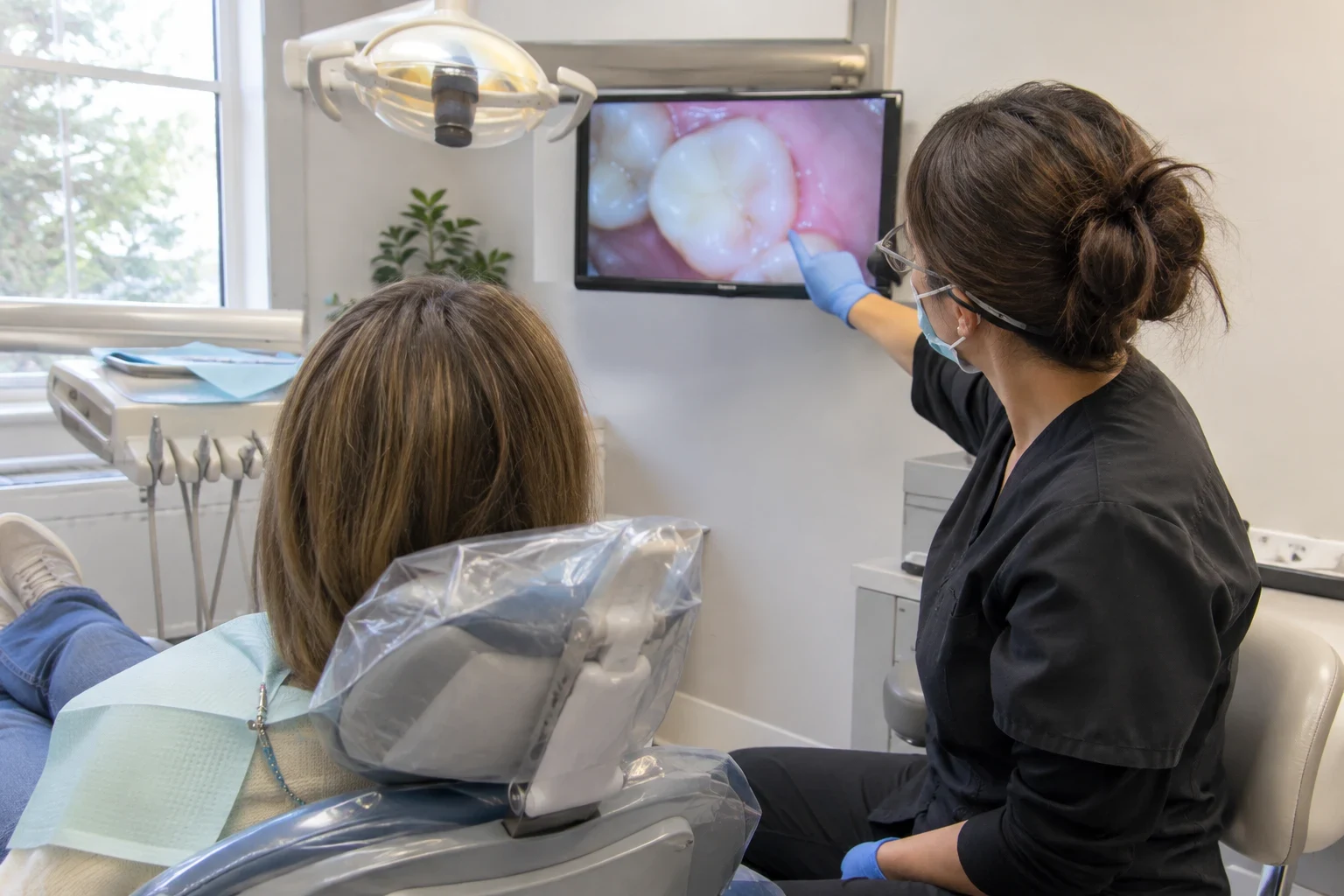
A checkup with us means a careful look at your teeth, gums and bite, plus a cleaning that removes the hardened tartar your brush can't reach. We show you what we find on the screen, explain it plainly and only recommend treatment the findings support.
Why a Checkup Catches What You Can't Feel
Most dental problems are quiet at first. A cavity between two molars, early bone loss around a tooth or a crack under an old filling usually causes no pain until it is large. Regular exams and cleanings find these things while the fix is small, often a simple filling instead of a crown or an extraction.
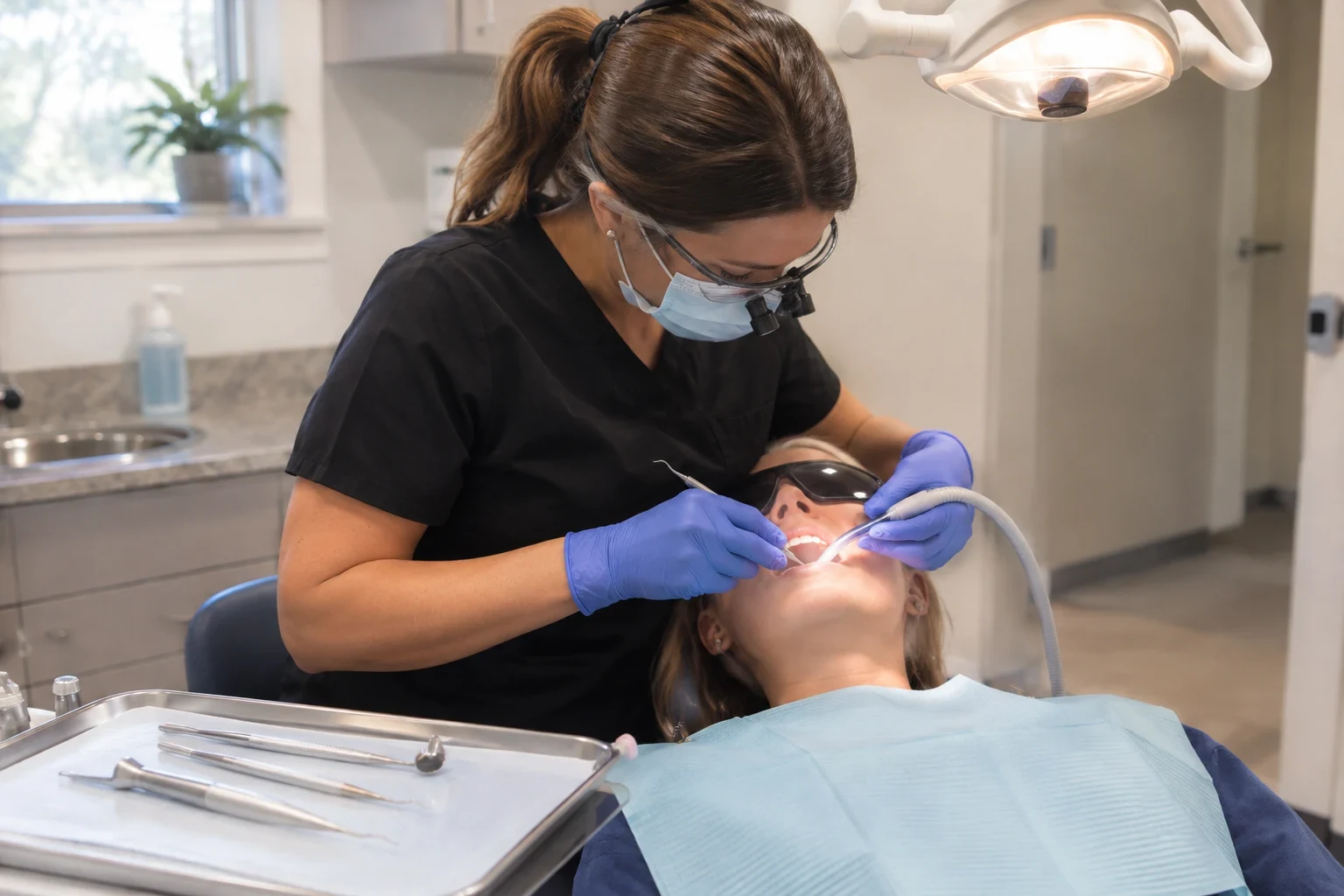
Every day, a sticky layer of bacteria called plaque builds up on your teeth. Whatever brushing and flossing miss gets mineralized by your saliva, and within a few days it turns into tartar, also known as calculus. That hard deposit locks onto enamel and gathers along and below the gumline, keeping the gums irritated. Brushing cannot take it off. Removing it takes hand scalers and an ultrasonic instrument.
We handle each visit the way we would want a neighbor's checkup handled: unhurried, explained step by step, with no pressure to book work you don't need. Patients come to us from Webster and nearby towns like Oxford, Dudley and Charlton for that kind of straightforward care.
What Your Exam and Cleaning Include
- Gum pocket measurements
- A thin, gentle probe measures the gap between each tooth and the gum around it. Healthy readings are shallow. Deeper numbers or bleeding signal gum disease, and comparing readings visit to visit shows whether your gums are holding steady or changing.
- Images on the right schedule
- Bitewing films reveal decay hiding where back teeth touch, along with the height of the bone holding them in place. How often we take them depends on your history and risk, so they are not a routine part of every appointment.
- Scaling and polishing
- An ultrasonic scaler and fine hand instruments lift tartar off above and just under the gumline. A polish then clears surface stain and leftover plaque, leaving enamel smooth so bacteria have less to grip.
- Check of existing dental work
- We inspect the edges of fillings, crowns and bridges for gaps, chips or new decay. Catching a failing margin early is much simpler than fixing it once decay has spread beneath.
- Oral cancer and soft tissue screening
- We examine the tongue, cheeks, floor of the mouth and throat for sores, patches or lumps that deserve a closer look.
- A clear treatment plan
- You leave with a written summary of what we found, what can wait and what should not, so you can plan around your schedule and budget.
Signs You Are Due for an Exam and Cleaning
Gums bleed when you floss
Bleeding is the most common early sign of gingivitis. It is usually reversible with a cleaning and better daily habits, but only if it is caught before it reaches the bone.
Bad breath that keeps coming back
Bacteria trapped in tartar and gum pockets release sulfur compounds that mouthwash only masks for a while.
New sensitivity to cold or sweets
A sharp twinge can mean early decay, a worn filling edge or gum recession exposing the root surface. Each has a different fix, and an exam tells us which one it is.
A rough or yellow ridge near the gumline
Tartar often builds up first behind the lower front teeth, close to the saliva glands. If you can feel it with your tongue, it needs professional removal.
It has been more than a year
Even without symptoms, a long gap lets small problems grow. Starting again is simple, and we will not lecture you about the time away.
How Your Visit Goes
- 1
Book by phone
Give us a ring and we will settle on a day and time that fits around your week. Keep your insurance card nearby so we can confirm your coverage ahead of the appointment.
- 2
History and comfort check
We go through your medications and health history, because certain conditions and drugs affect the gums and how easily they bleed. Mention any sore spots or nerves about dental work and we will set our pace to match.
- 3
Exam and X-rays
We take any images that are due, measure gum pockets and examine each tooth along with your existing work.
- 4
Cleaning
Tartar is scaled off, the teeth are polished and we floss each contact point. Most patients find it comfortable, and tender areas can be numbed with a topical gel.
- 5
Review and next steps
We walk you through the findings using your X-rays and photos, then set up your next visit. If you need a filling or other care, you hear the options and costs before anything goes on the schedule.
What Affects the Cost of a Checkup
Preventive visits tend to be the most predictable part of dental care, and many insurance plans pay for them generously. What you owe comes down mostly to your coverage and to what your mouth needs at that visit. Any charges are explained to you before the work starts, not afterward.
- Your insurance plan
- We accept most dental insurance plans. Exams and cleanings are often covered at a high percentage, but plans differ on deductibles and on how many visits they allow each year. We can look up your benefits when you schedule.
- X-rays due at this visit
- A first visit usually calls for a full series of images, which costs more than a routine pair of bitewings. Some checkups need no new images at all.
- Routine or deep cleaning
- When pockets measure deep and calculus has settled below the gumline, you may need scaling and root planing. We work through it by quadrant, smoothing the root surfaces so the gum can reattach, and it is billed separately from a standard cleaning.
- No insurance
- If you have no dental coverage, our Office Dental Plan is an option for your preventive visits. For any treatment a checkup turns up, the CareCredit Patient Payment Plan lets you spread the cost out.
Exam and Cleaning Questions
Something not covered here? (508) 938-8976
How often should I get a cleaning?
Two visits a year suits most adults. Patients with past gum disease, diabetes or fast tartar buildup often do better with three or four, because bacteria below the gumline grow back in roughly three months. We set your interval from your pocket measurements rather than a one-size rule.
Does a cleaning hurt?
Most patients describe pressure and a light vibration rather than pain. Gums that are already inflamed can feel tender, so we slow the pace and can apply a numbing gel. Speak up at any point and we will change what we are doing.
Do I need X-rays every visit?
No. How often we image depends on your history and decay risk, commonly bitewings yearly and a full series every few years. Had images taken at another practice recently? Give us the office name and we will ask them to send copies, which spares you a second round.
What happens if you find a cavity?
We point it out to you on the X-ray or an intraoral photo and explain how far it seems to go. A small cavity usually needs only a simple filling, scheduled when it suits you. If a spot can safely be monitored instead, we will say so.
Can my kids come in at the same time?
Yes, plenty of families book visits one after another. Children's checkups add care suited to their age, such as fluoride and sealants, and our Kids' Dentistry page explains it in more detail.
Put Your Next Checkup on the Calendar
A short visit now can save you a crown or an extraction later. Call us and we will find an appointment that fits your week and check your insurance while we are on the phone.