ServicesKids' Dentistry
Kids' Dentistry in Webster
We look after children's teeth from the first baby tooth through the teen years. Each visit covers what is happening in your child's mouth, what we did and why, and what to watch for at home before the next checkup.
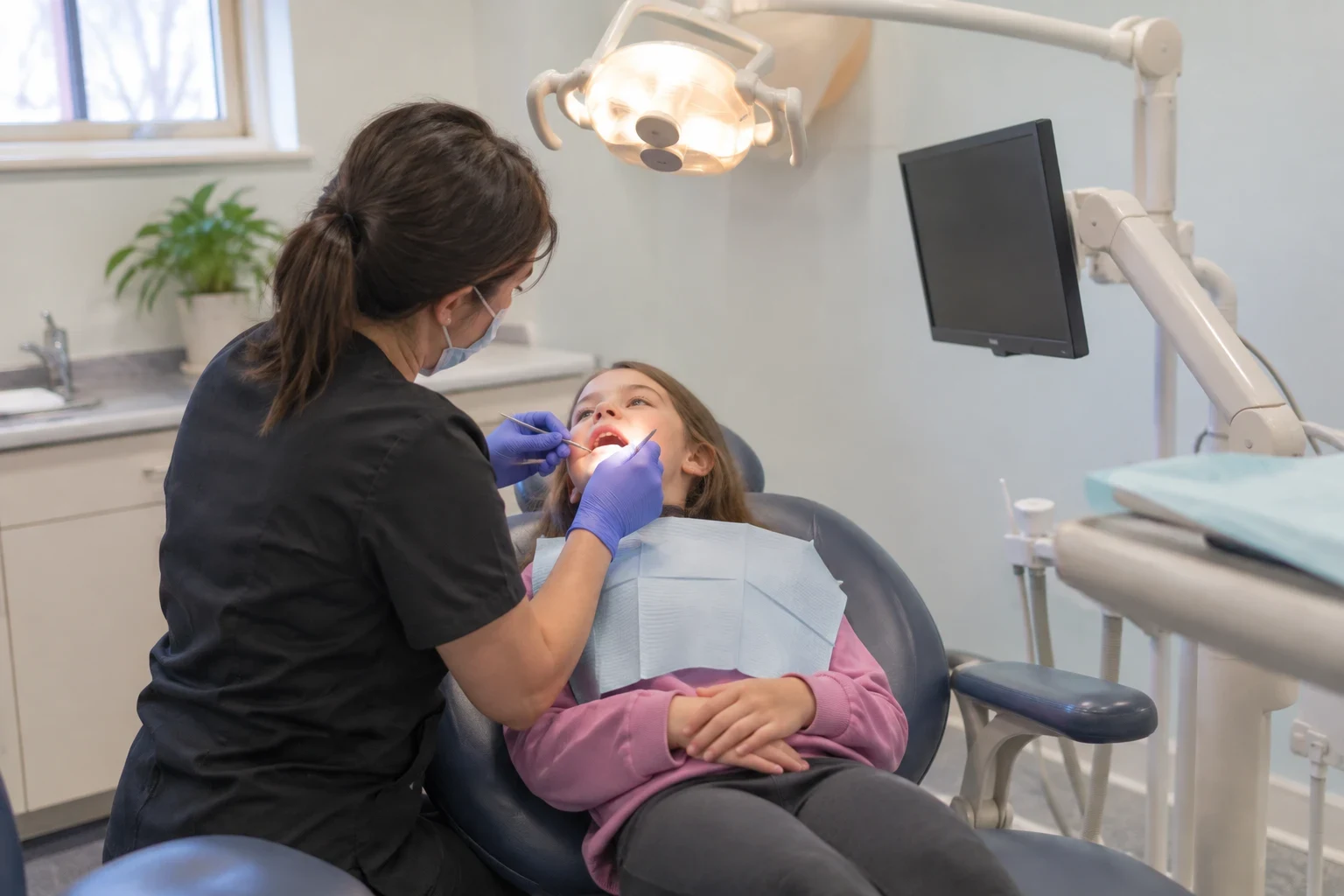
Dental care built around how children's teeth work
Baby teeth are not just placeholders. Their enamel is roughly half as thick as adult enamel, so a small cavity can reach the soft dentin underneath in months rather than years. The back molars hold space for adult teeth that will not arrive until around age 10 to 12, and losing one early can let neighboring teeth drift into that space.
Kids' dentistry is about catching those problems while they are small and keeping visits calm enough that a child is willing to come back. We explain each step before we do it and show the tools first. A parent can stay in the room for every visit.
Most of the treatment here is preventive: cleanings, fluoride and sealants. When a tooth does need work, we start with the smallest fix that will hold up and talk it through with you before anything begins.
What a children's visit can include
- Exam and growth check
- We count and chart the teeth, check how the bite is lining up and look at the gums, tongue and cheeks. For younger children we also note which adult teeth are on the way.
- Gentle cleaning
- Plaque and tartar come off with small hand instruments and a soft polishing cup. We go slowly and stop if a child needs a break.
- Fluoride varnish
- A thin coat of fluoride is painted onto the teeth and sets in seconds. It helps harden enamel and can slow early decay that has not yet broken through the surface.
- Sealants on molars
- The chewing surfaces of back molars have deep grooves that a toothbrush bristle cannot fully reach. A sealant is a flowable resin that fills those grooves and hardens under a curing light, with no drilling or numbing needed.
- X-rays when they are useful
- Cavities often start between teeth where we cannot see them. We take X-rays based on your child's age and decay risk, not on a fixed schedule, using small digital sensors.
- Fillings and baby tooth removal
- If a cavity needs treatment, our fillings page covers how we restore it with tooth-colored material. A badly damaged or stuck baby tooth may need removal, which our extractions page explains.
When your child's teeth need a dentist's look
Pale patches or dark spots on teeth
Matte white streaks near where the tooth meets the gum are often the first stage of a cavity: the enamel is losing minerals but still has an intact surface. When the spot darkens to tan or brown, the decay has typically moved further in.
Flinching at cold drinks or candy
That sharp reaction can mean the enamel has thinned enough to expose dentin. Young kids seldom explain it well, so notice if your child chews only on one side or stops eating partway through.
Gums that bleed or puff up
Bleeding during brushing usually comes from plaque left along the gumline. A raised bump or swelling next to a single tooth deserves a prompt visit, because it may be a sign of infection.
Two rows of teeth in front
Lower front adult teeth often erupt behind baby teeth that have not come out yet. Many times the baby tooth loosens by itself, but if it is still solid after a few weeks we will check whether it should come out.
First birthday with no checkup yet
We like to see children when the first tooth shows up, or by age one at the latest. That early visit lets us catch decay from bottles or sippy cups and show you how to brush very small teeth.
What moves the price of a child's visit
The lightest visit is a standard checkup with a cleaning, and keeping decay away is almost always less costly than repairing it once it starts. We accept most dental insurance plans. If your family has no coverage, our Office Dental Plan is one option, and the CareCredit Patient Payment Plan lets you spread treatment costs over time. Nothing starts until we have explained the treatment and its cost so the numbers are clear first.
Prevention versus repair
Fluoride, sealants and cleanings are the lower-cost side of care. Restoring a decayed tooth or taking out a baby tooth means more chair time and more material.
How many teeth need work
Each sealed molar is counted separately. Treating four cavities takes longer than treating one, and the cost follows that time.
Whether X-rays are due
We decide on X-rays by your child's age and cavity risk, so one visit may include images while the next does not.
What your plan covers
Insurance plans often treat a child's preventive visits under different rules than adult care. We are glad to go over your plan's listed benefits with you, but the plan itself makes the final call on what it pays.
How the appointment goes
- 1
A phone call to set it up
When you call, we ask your child's age, any worries you have and whether this is a first dental visit. That helps us pick a time of day when your child is usually rested.
- 2
Tell, show, then do
Before each step we name the tool, let your child see or touch it and explain what it will feel like. The mirror becomes something to look through, and the suction gets a turn on a fingertip first.
- 3
Cleaning, exam and any preventive care
We clean, check and add fluoride or sealants if they make sense. Younger children can sit on a parent's lap for a knee-to-knee exam.
- 4
A plain talk with you afterward
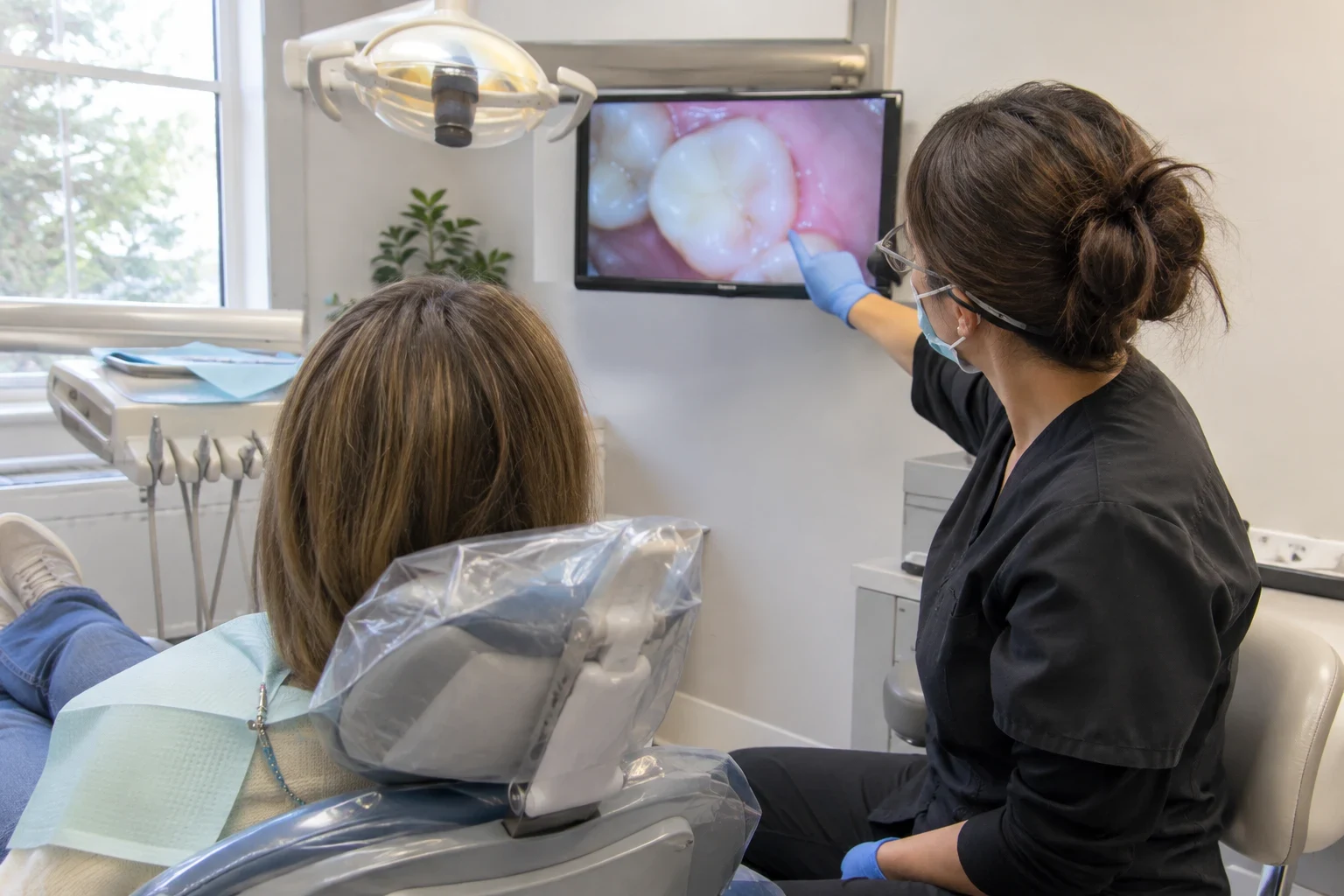
We show you what we found, including any X-rays, and explain whether something needs treatment now, can be watched or needs nothing at all. You leave knowing the next step and when the next checkup should be.
Parents' questions about kids' dentistry
Can I stay with my child during the visit?
Yes. You are welcome in the room from start to finish. Some older kids prefer to sit in the chair on their own, and we are fine with that as well.
Why fix a baby tooth if it is going to fall out?
Because many baby teeth stay put much longer than parents expect. The back baby molars often remain until about age 10 to 12, which gives decay years to travel inward. An untreated cavity can reach the nerve, cause pain or an infection and even affect the adult tooth forming underneath. Treating it while it is small usually means a quicker, easier appointment for your child.
Are sealants safe, and how long do they last?
A sealant is a thin resin coating bonded to the enamel on the chewing surface of a molar. It goes on without any drilling or numbing. Over time chewing can wear it down or chip an edge, so we check every sealant at checkups and touch it up when it needs it.
How often should my child have a checkup?
For most kids, a cleaning and exam roughly twice a year works well. A child who gets cavities often, or who wears an orthodontic appliance, may do better with shorter gaps between visits, and we will let you know if that fits your child.
My child is nervous. What can I do before the visit?
Describe the visit in a few calm, upbeat words and leave out words like hurt or shot. We handle the details in the chair, showing each tool before it is used. If your child is having a hard day, we pause and pick it up at another visit rather than force it.
Ready to book your child's next checkup
One phone conversation puts your child on our calendar for an appointment. Families reach us from Webster, Oxford, Dudley and the towns around them, and we can answer first-visit questions while you are on the line.