ServicesTeeth Whitening
Teeth Whitening in Webster, MA
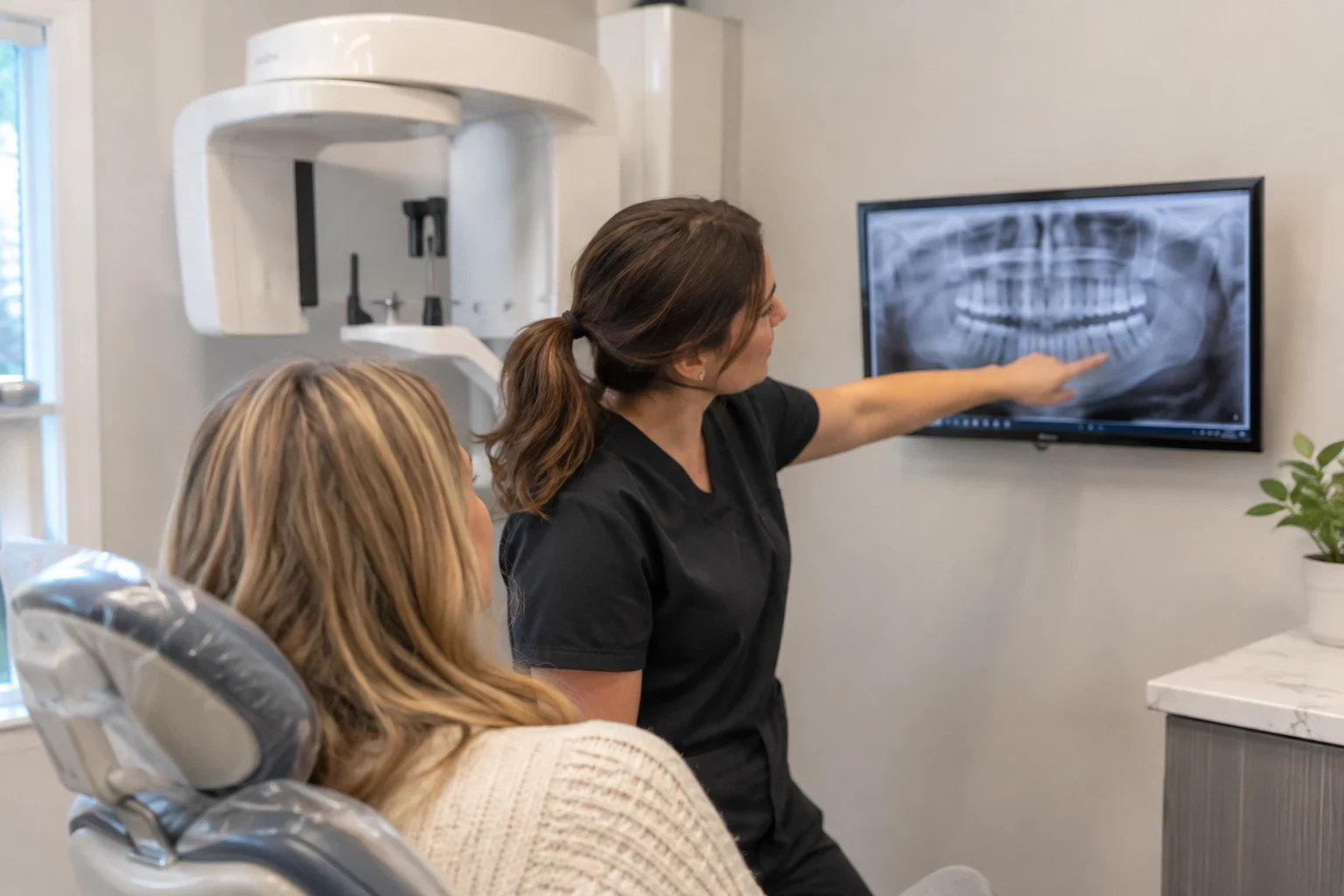
Our professional peroxide whitening begins with a look at your enamel, your gums and any crowns or fillings you already have. That check keeps sensitivity manageable and helps the color come out consistent. Before any gel goes on, we tell you which teeth will lighten and which won't.
How Professional Whitening Actually Works
Whitening gel contains hydrogen peroxide or carbamide peroxide. As it breaks down, it releases oxygen that moves through the enamel and into the dentin underneath, where it breaks apart the large pigment molecules left by coffee, tea, red wine and tobacco. Smaller molecules reflect less color, so the tooth reads lighter.
That chemistry only works on natural tooth structure. Porcelain crowns, bridges and tooth-colored fillings keep the shade they were made in. This is why we look at your whole smile first, and why some patients plan whitening before replacing an older crown so the new one can be matched to the brighter shade.
Patients come to us from Webster, Oxford, Dudley and nearby towns for this the same way a neighbor would ask for advice: they want a straight answer about whether it will work for their teeth, and what it will feel like.
What Your Whitening Treatment Includes
An exam before any gel
Peroxide on an open cavity, cracked enamel or a leaking filling can cause sharp pain. We check for these first and treat them, or tell you if a cleaning or filling should come before whitening.
Shade recording
We note your starting shade on a standard shade guide and take photos. That gives you a fair before-and-after comparison instead of relying on memory.
Gum protection
Strong gel irritates gum tissue. We isolate the gums so the gel stays on the enamel where it belongs.
Custom-fitted trays
Trays are made from impressions of your teeth, so the gel sits evenly against each tooth and does not pool along the gumline the way loose store-bought trays can.
A sensitivity plan
If you already have sensitive teeth, we may suggest a potassium nitrate toothpaste beforehand and adjust gel strength or wear time.
Signs Whitening Could Be the Right Step
Yellowing that built up slowly
Gradual yellow or brown staining from drinks and food is extrinsic and usually responds well to peroxide.
Over-the-counter strips stopped working
Drugstore products use lower peroxide levels and loose fit. If they have plateaued, professional gel and fitted trays often reach further.
Planning a new crown or bridge
Whitening first lets us match a new crown to your lighter shade instead of locking in the current color.
Teeth look darker with age
Enamel thins over the years and more of the yellower dentin shows through. Whitening lightens that dentin layer.
Gray or banded staining
Gray bands from certain childhood antibiotics, or a single dark tooth after an injury, respond less predictably. We'll tell you honestly what whitening can and cannot do, and when a crown is the better fix.
What Happens From First Visit to Final Shade
- 1
Exam and cleaning
We look for decay, cracks and gum recession, and remove surface tartar and plaque. Gel works best on clean enamel.
- 2
Shade and impressions
We record your starting shade, take photos and take impressions for your custom trays.
- 3
Starting treatment
We show you how much gel to place, how long to wear the trays and what normal sensitivity feels like. A thin line of gel per tooth is enough; more only irritates the gums.
- 4
Follow-up check
After the first stretch of treatment we compare shades, check your gums and adjust the plan if teeth are sensitive or one area is lagging.
What Affects the Cost of Whitening
Most dental insurance plans treat whitening as cosmetic, which means the fee usually comes out of pocket. We go over the cost with you before any gel is placed, so the number holds no surprises. If you have no coverage at all, ask during your call about the Office Dental Plan for patients without insurance. Patients who prefer to spread payments out can use the CareCredit Patient Payment Plan.
- Prep work needed first
- Some patients need a cleaning, a filling or care for gum recession before gel can safely go on. Those are billed as separate services, and your insurance may cover some of them.
- Type of whitening
- Custom take-home trays and in-office treatment use different materials and different amounts of chair time.
- How deep the staining goes
- Light surface staining may clear with a short course. Older or deeper staining often takes more gel over a longer stretch.
- Touch-up gel later
- Your trays can be reused, so later touch-ups usually mean buying more gel rather than starting over.
Teeth Whitening Questions
Something not covered here? (508) 938-8976
Will whitening hurt my teeth?
Used as directed, it does not damage healthy enamel. Many people feel brief, zinging sensitivity during treatment because peroxide reaches the nerve through tiny tubules in the dentin. That feeling fades once treatment ends, and desensitizing toothpaste or shorter wear times can ease it.
Will my crowns and fillings whiten too?
No. Porcelain and composite do not react to peroxide. When those restorations sit on front teeth, they can look darker next to newly lightened natural teeth, so we'll discuss whether replacing them later makes sense for your smile.
How long will my whiter shade last?
Your habits matter most here, especially coffee, tea, red wine and smoking. Those slowly bring staining back. A few nights of touch-up gel in the trays you already own keeps the shade where you want it.
Is whitening okay for my teenager?
We generally wait until the permanent teeth are in and the nerve chambers have shrunk, since younger teeth tend to be more sensitive. We can check your teen during a regular exam and give you a straight answer.
Can I whiten if I have sensitive teeth or receding gums?
Often yes, with adjustments. Exposed root surfaces do not whiten and can be very sensitive, so we may protect them or use a lower-strength gel. We'll look at your gums before recommending anything.
Ready to See What Your Teeth Can Do
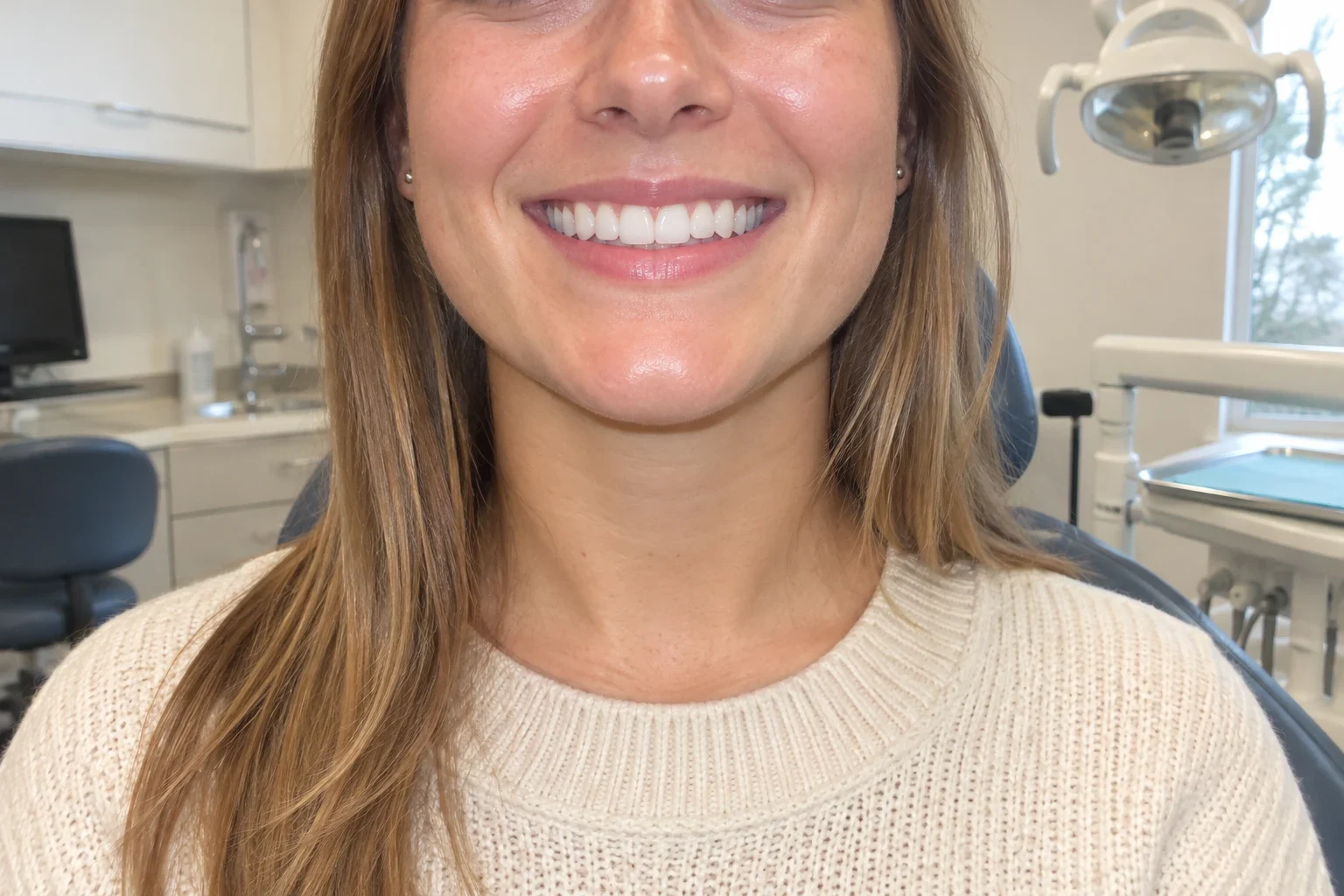
Start with an exam so we can tell you which teeth will lighten and what to expect. If anything else needs attention, like a cleaning or a filling, we'll explain that first.