ServicesFillings
Fillings in Webster
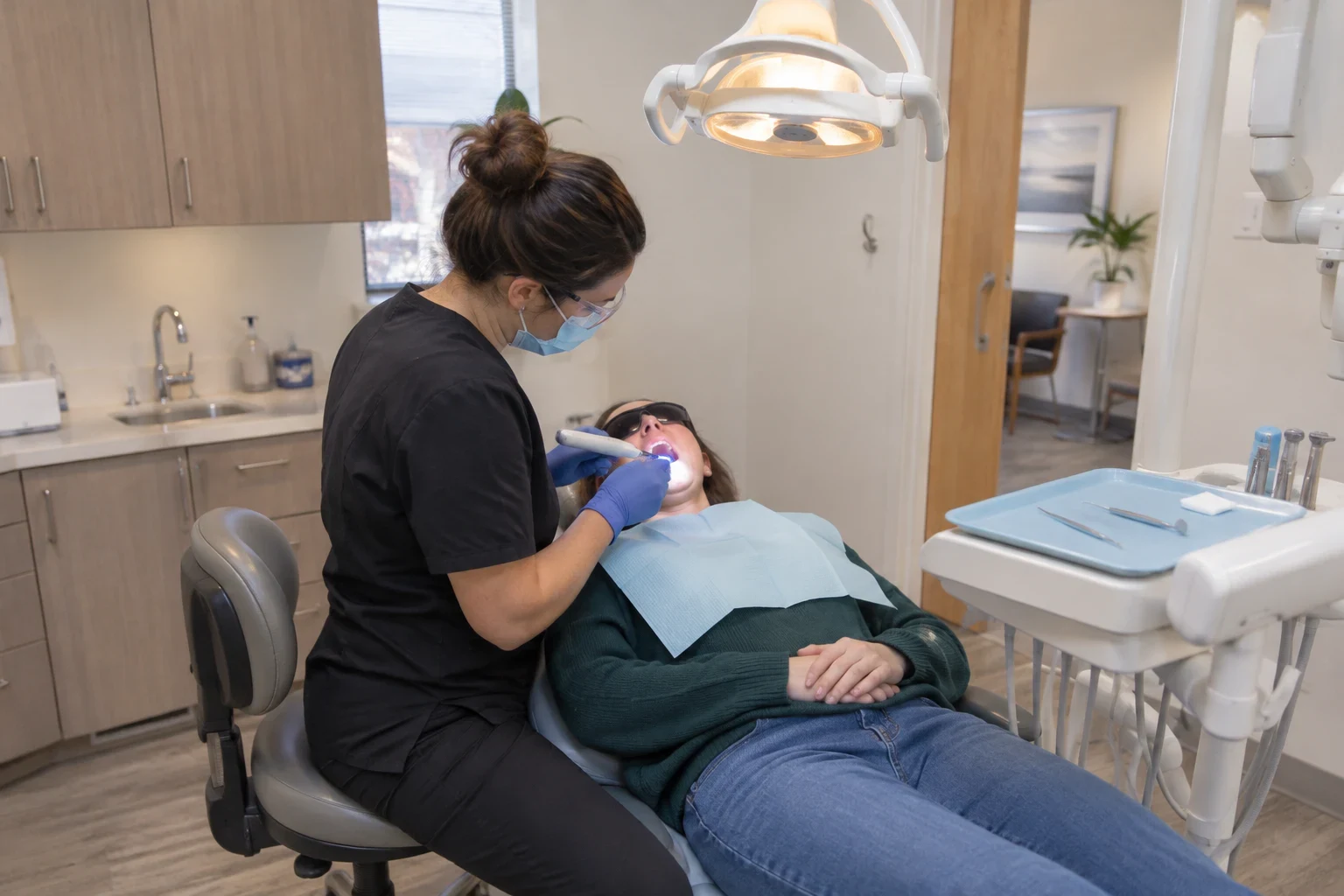
A cavity is a small hole that keeps growing until someone stops it. We numb the tooth, clear out the soft decayed enamel and dentin, and rebuild the spot with a tooth-colored composite that bonds to what is left. You leave with a sealed tooth that feels normal when you bite.
Why a Cavity Needs a Filling, and When Another Fix Fits Better
The bacteria in plaque break down sugars from what you eat and release acid as a byproduct. Repeated acid attacks dissolve enamel, the hard outer shell of the tooth, and once they break through, decay moves faster in dentin, the softer layer underneath. A cavity that has opened up cannot grow back. Filling it means taking out the damaged tissue and closing the hole so bacteria have nowhere left to collect.
Fillings work best when plenty of healthy tooth is left around the cavity to support them. When decay or a fracture has claimed a big portion of the tooth, a filling can flex under chewing and crack, and in that case we will recommend a crown instead. We would rather give you a straight answer up front than fix the same tooth twice.
What Your Filling Visit Includes
- Exam and X-rays of the tooth
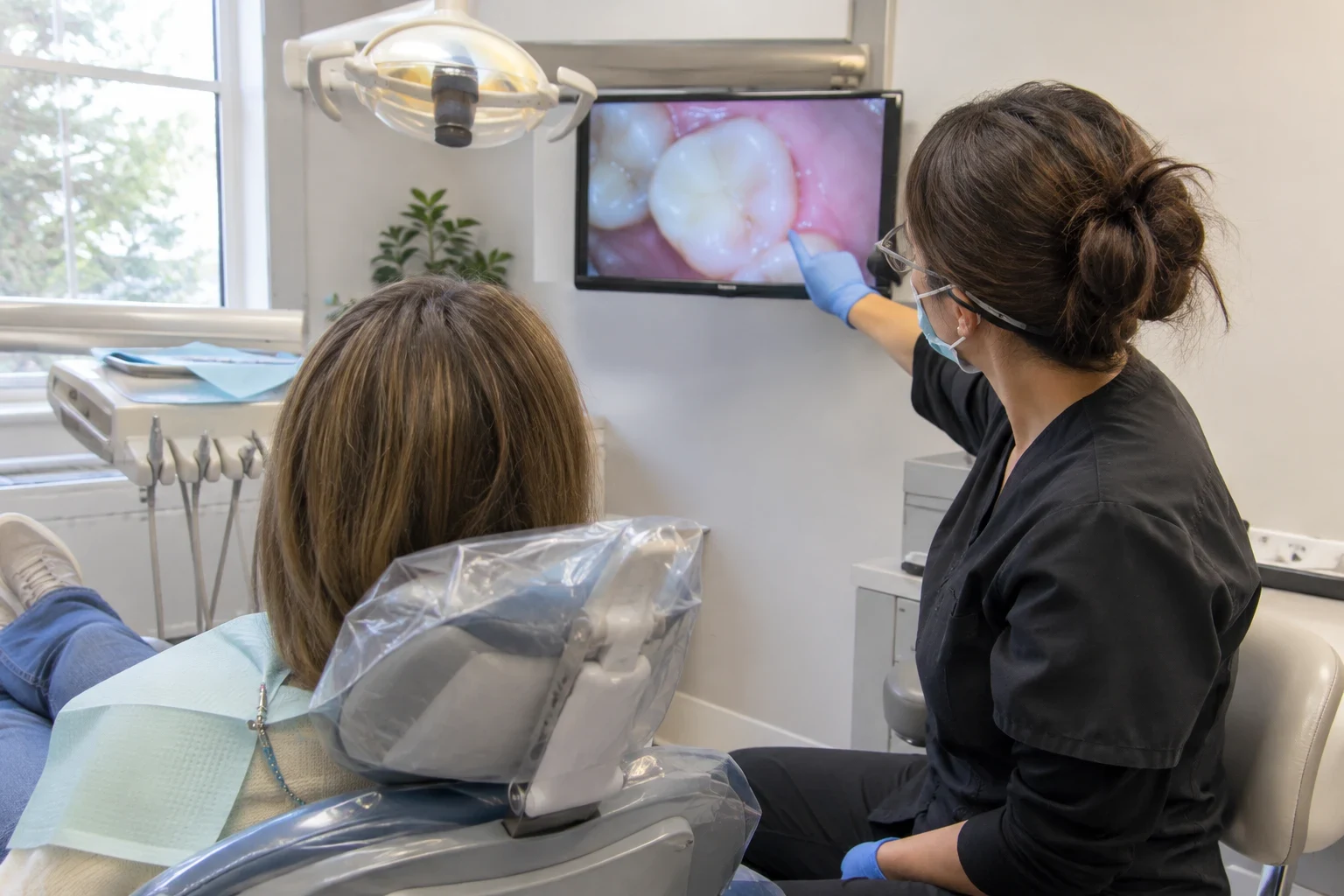
- We look at the tooth and take a bitewing X-ray when needed, since decay between teeth often hides from the eye. We show you the image so you can see the shadow we are treating.
- Local anesthetic
- We numb the area before any drilling. For a small, shallow cavity some patients choose to skip it, and that is your decision to make.
- Decay removal
- We remove only the soft, infected tooth structure and keep as much sound enamel as we can. Less removal means a stronger tooth over time.
- Composite resin in layers
- The tooth is etched and coated with an adhesive, then the composite is placed in thin layers and hardened with a curing light. The adhesive seals the edges, which helps keep new decay from creeping in under the filling.
- Shaping and bite check
- We carve the filling to match your natural grooves, then have you bite on marking paper. High spots are adjusted so the tooth does not ache from taking too much pressure.
- Replacing worn fillings
- Old silver or composite fillings can crack or leak at the margins. We can remove a failing one and rebuild the tooth with new composite.
Signs You May Need a Filling
A twinge with sweets or cold
A quick, sharp ache from ice water or a piece of candy often means decay has reached the dentin, which is full of tiny tubes that lead toward the nerve.
Floss that catches or shreds
If floss keeps tearing in the same spot, there may be a rough cavity edge or a cracked old filling between those teeth.
A dark spot or a hole you can feel
Brown or chalky white patches, or a pit your tongue keeps finding, are worth a look before they get bigger.
Pain when you bite down
Discomfort on chewing can point to decay under an old filling or a small crack. Both are easier to treat early.
Food packing in one area
A gap where food wedges every meal can mean a broken filling edge or decay that has changed the tooth's contour.
How the Appointment Runs
- 1
Check and plan
We confirm which tooth and how many surfaces are involved, then explain what we will do and why before we start.
- 2
Numb and isolate
Once you are fully numb, we wall off the tooth with cotton rolls or a small rubber barrier so saliva stays away. Composite only grips a dry surface well, which is why we take care here.
- 3
Clean out and fill
We remove the decay, etch and prime the tooth, and build the composite in layers, curing each one with light.
- 4
Shape, polish and go
We shape and polish the filling and check your bite. A single filling usually fits within one short appointment, and food is fine as soon as feeling returns to your lip and tongue.
What Moves the Price of a Filling
A filling is priced by how much of the tooth is involved, and we go over that number with you before any work begins. We accept most dental insurance plans, and most of them list fillings as a basic service. If you have no dental insurance, ask us about our Office Dental Plan for patients without insurance. The CareCredit Patient Payment Plan is also available when you would rather spread the cost over several months.
- How many surfaces are involved
- Decay on a single chewing surface is a smaller repair than decay that wraps down the side and between two teeth. Every extra surface takes more time and more composite.
- How deep the decay goes
- When decay sits close to the pulp, we may place a protective liner beneath the composite. Very deep decay can call for a different treatment entirely.
- Where the tooth sits
- Molars at the back are harder to reach and harder to keep dry than front teeth, so the work there tends to be more involved.
- Removing an old filling first
- Taking out a worn filling and cleaning the decay beneath it adds steps compared with treating a brand-new cavity.
- What your plan pays for
- Some insurance plans pay a different rate for composite on back teeth than on front teeth. We are glad to help you read your coverage.
Questions About Fillings
Something not covered here? (508) 938-8976
Does getting a filling hurt?
Once the anesthetic is working, you will likely notice pressure and some vibration rather than pain. The injection feels like a brief pinch, and we take it slowly. Tender gums or a little cold sensitivity for a few days afterward is normal and fades on its own.
When can I eat after a filling?
The curing light hardens composite completely before you leave the chair, so the filling is ready right away. Hold off on chewing until the numbness is gone so you do not bite your cheek or tongue.
How long do composite fillings last?
That depends on the filling's size, its spot in your mouth and your habits. Grinding, crunching ice and sipping sugary drinks all wear it down faster. Regular Exams & Cleanings let us spot a worn edge before decay slips under it.
Can you replace my old silver fillings?
Yes, when they are cracked, leaking or showing decay at the edges. If an old filling is sound and the tooth is healthy, we may recommend leaving it in place, because each removal costs a little more tooth.
Do you fill children's teeth?
Yes. Primary teeth act as guides that keep space open until the permanent teeth erupt, and decay in a baby molar can still cause pain or infection. That is why we treat it rather than wait for the tooth to fall out. Our Kids' Dentistry page explains how we keep young patients comfortable.
What if the tooth has too much damage for a filling?
We will say so plainly. A large cavity or a crack is often better handled with a crown, and a tooth that cannot be saved may need an extraction. We lay out the options and you make the choice.

Stop a Cavity While It Is Still Small
A small cavity takes less time and less tooth to fix than one left for another year. Phone our office, let us know where it hurts or what you have noticed, and we will find an appointment that fits your week.