ServicesInvisalign / Clear Aligners
Invisalign and Clear Aligners in Webster
Clear aligners guide crooked, crowded or gapped teeth into line using a run of thin, removable plastic trays, each moving teeth a fraction of a millimeter. Before anything is ordered, we check your gums, fillings and bite, so you know whether aligners suit your teeth.
How clear aligners move teeth
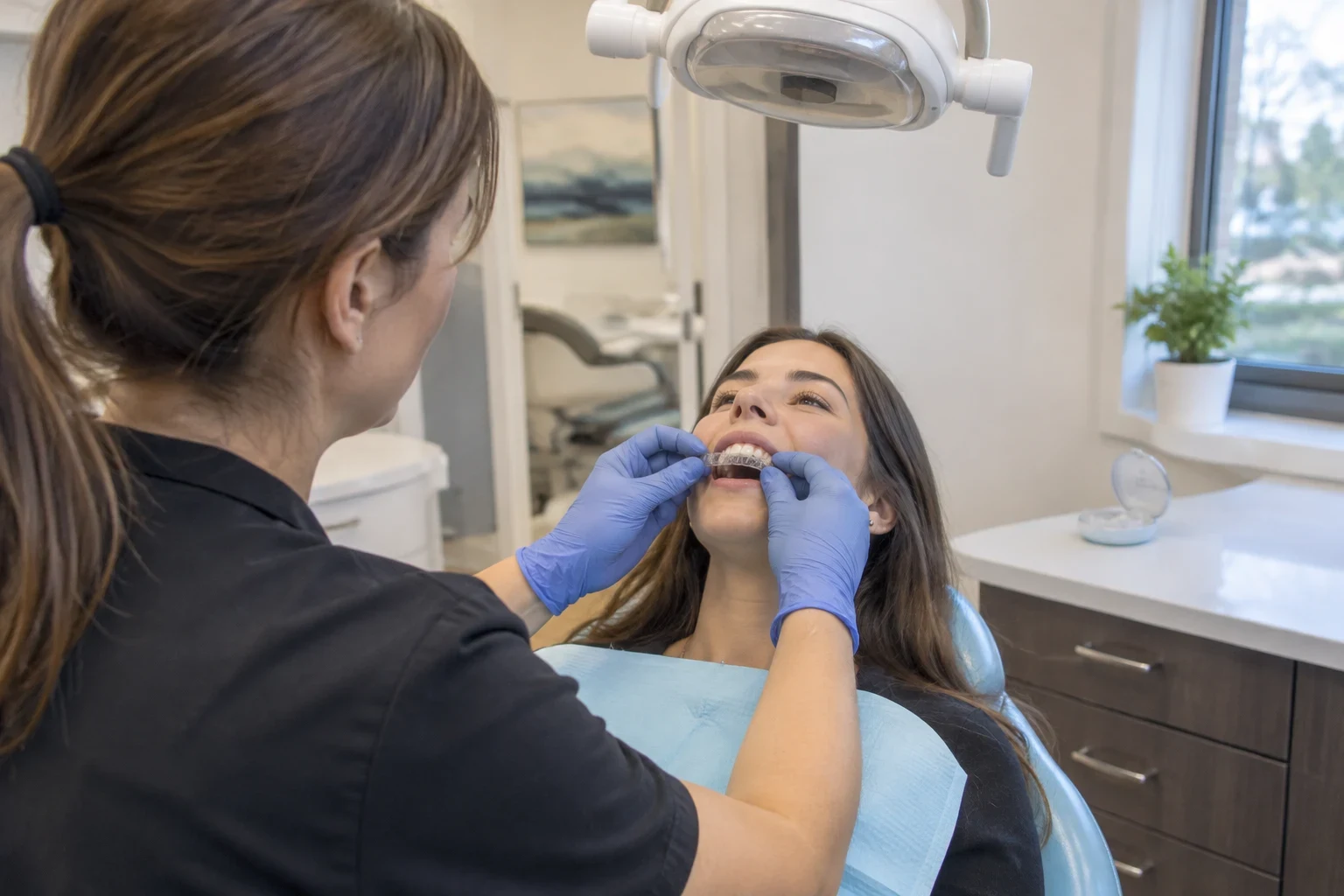
Every tray in the series is molded from clear medical-grade plastic and differs slightly from the last. You keep each set in for roughly 22 hours daily, and that light, constant force presses on chosen teeth. The ligament holding each root lets the surrounding bone reshape, so the tooth shifts. On some teeth we place small tooth-colored bumps called attachments, which give the plastic a handle for rotations and larger movements.
Aligners handle crowding, spacing, mild to moderate crossbites and teeth that slipped after braces years ago. A very large bite correction or a badly rotated tooth may need a different approach, and we will say so plainly. We treat every patient the way we would want a neighbor treated: an honest yes or no up front, then a clear plan.
What your aligner treatment includes
- Exam and X-rays first
- Moving a tooth with active decay or swollen gums can make both problems worse. We check for cavities, bone levels and gum health before planning, and take care of any fillings or a cleaning first.
- Scans or impressions
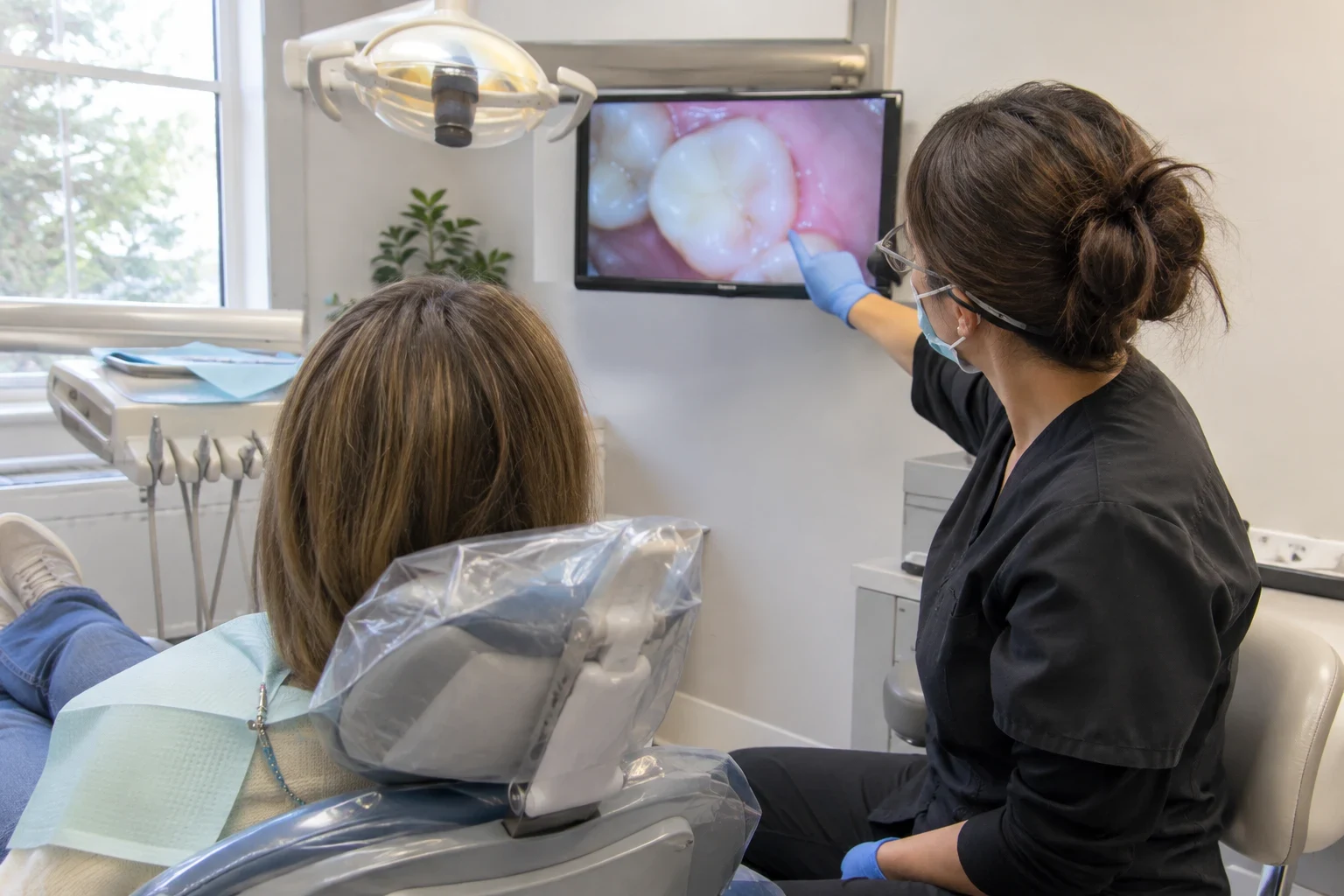
- We capture the precise shape of your teeth and how they meet. That record guides every planned movement and is used to make each tray in the series.
- A treatment plan you can see
- You get a preview of how each tooth is planned to move, the estimated number of trays and the finished bite we are aiming for.
- Attachments and fitting
- We place any attachments your plan calls for and confirm the first trays sit all the way down. Then we walk you through snapping them in and easing them out so the plastic doesn't warp.
- Progress checks
- Regular visits confirm your teeth are keeping pace with the plan. When a tooth falls behind, refinement trays can bring it back on track.
- Retainers at the end
- Straightened teeth naturally try to drift back. A retainer holds them in place while the bone around the roots firms up.
Signs clear aligners may help you
Crowded front teeth
Overlapping teeth hold plaque in corners a brush and floss struggle to reach. Lining them up makes daily cleaning simpler and cuts the risk of decay between teeth.
Gaps that keep catching food
Open spaces trap food and can leave the gum between teeth tender. Many of these gaps can be closed with aligners.
Teeth that shifted after braces
If your retainer went in a drawer years ago, the lower front teeth often crowd again. It is one of the most common reasons adults ask us about aligners.
Uneven wear or chipping
Teeth that meet at a poor angle can chip at the edges or grind down over time. Lining up the bite shares chewing pressure more evenly across the teeth.
You want a discreet option
Clear trays are hard to spot when you talk, and they come out for eating, brushing and flossing.
What affects the cost of clear aligners
The biggest driver is the distance each tooth has to move and the number of trays needed to move it there. You see the cost of your own treatment plan before you agree to anything. We accept most dental insurance plans, and plans with orthodontic benefits often put money toward aligners. If you have no insurance, our Office Dental Plan is built for patients like you, and the CareCredit Patient Payment Plan lets you pay in installments.
How complex the movement is
Lining up a few crowded front teeth takes fewer trays than fixing a crossbite or deep bite on both the upper and lower arch.
Tray count and refinements
A longer series means a longer treatment. Some cases add a short refinement series near the end to finish small details.
Care needed first
A cleaning, fillings or gum treatment done before straightening is billed separately from the aligners.
Your insurance benefits
Orthodontic coverage differs a lot from plan to plan, with age limits and lifetime maximums. We can look into what yours pays.
Retainers over time
Retainers protect the result once treatment ends. Replacing them every few years is part of the long-term cost.
What to expect, visit by visit
- 1
Consultation and exam
We examine your teeth, gums and bite, take X-rays when needed and ask what you would like to change. If a cavity or gum issue needs attention first, we explain why and in what order.
- 2
Records and planning
We take scans or impressions along with photos. Your tooth movements are mapped out, and you review the proposed result before any trays are made.
- 3
Fitting day
Attachments are placed with tooth-colored material in a short, comfortable visit that usually needs no numbing. You leave wearing your first trays, with the next sets and written care instructions.
- 4
Wearing and checking in
You change trays on the schedule we give you and stop by for periodic checks. A day or two of pressure with each new set is normal and means the teeth are moving.
- 5
Finishing and retention
When your teeth reach their planned positions, we polish away the attachments and fit your retainers.
Clear aligner questions
Do clear aligners hurt?
A new tray usually feels snug and a little sore for the first day or two. Patients describe it as a dull ache rather than a sharp pain, and it eases as the teeth settle into place. Soft foods and cold water make those first days easier.
Can I eat and drink with aligners in?
Plain water is fine with trays in. Remove them for meals and for any other drink, since sugar and acid sit against the enamel under the plastic and can lead to decay. Brush your teeth before the trays go back in.
How long does treatment take?
That depends on how much your teeth need to move. Mild crowding often wraps up well before a full bite correction would. We estimate your timeline once the treatment plan is built, and the estimate holds best when trays are worn all day.
What happens if I don't wear them enough?
Teeth only shift while the plastic is pushing on them. Too few hours of wear and the next tray won't sit down fully, so the plan slips behind. If you notice that, give us a call and we will check the fit and adjust.
Do I need a retainer afterward?
Yes. The bone and ligament around newly moved teeth need time to firm up, and teeth tend to drift on their own. Most patients start with full-time retainer wear and then move to nights only for the long run.
Can I whiten my teeth during treatment?
Many patients save teeth whitening for the end, after the attachments come off, so the color is even across each tooth. Bring it up at your appointment and we can build it into your plan.
Find out if aligners are right for your teeth
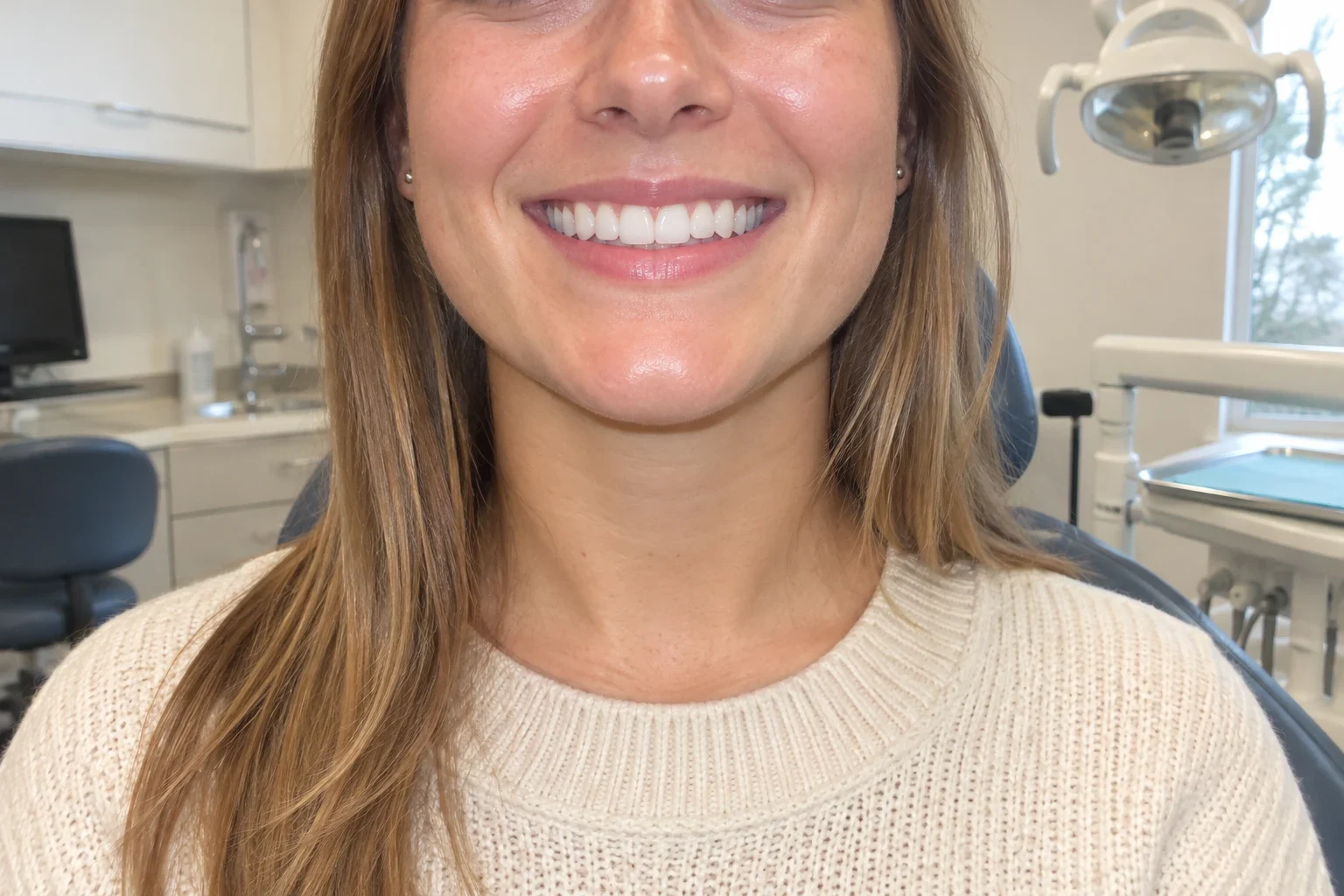
An appointment starts with an exam and an honest answer about what aligners can and cannot do for your bite. Patients come to us from Webster, Oxford, Dudley and nearby towns.