ServicesExtractions
Tooth Extractions in Webster
A cracked molar, a deep infection or a crowded wisdom tooth can leave you sore and unsure what comes next. We take an X-ray, tell you whether the tooth can be saved, and, if it can't, remove it gently and explain each healing step.
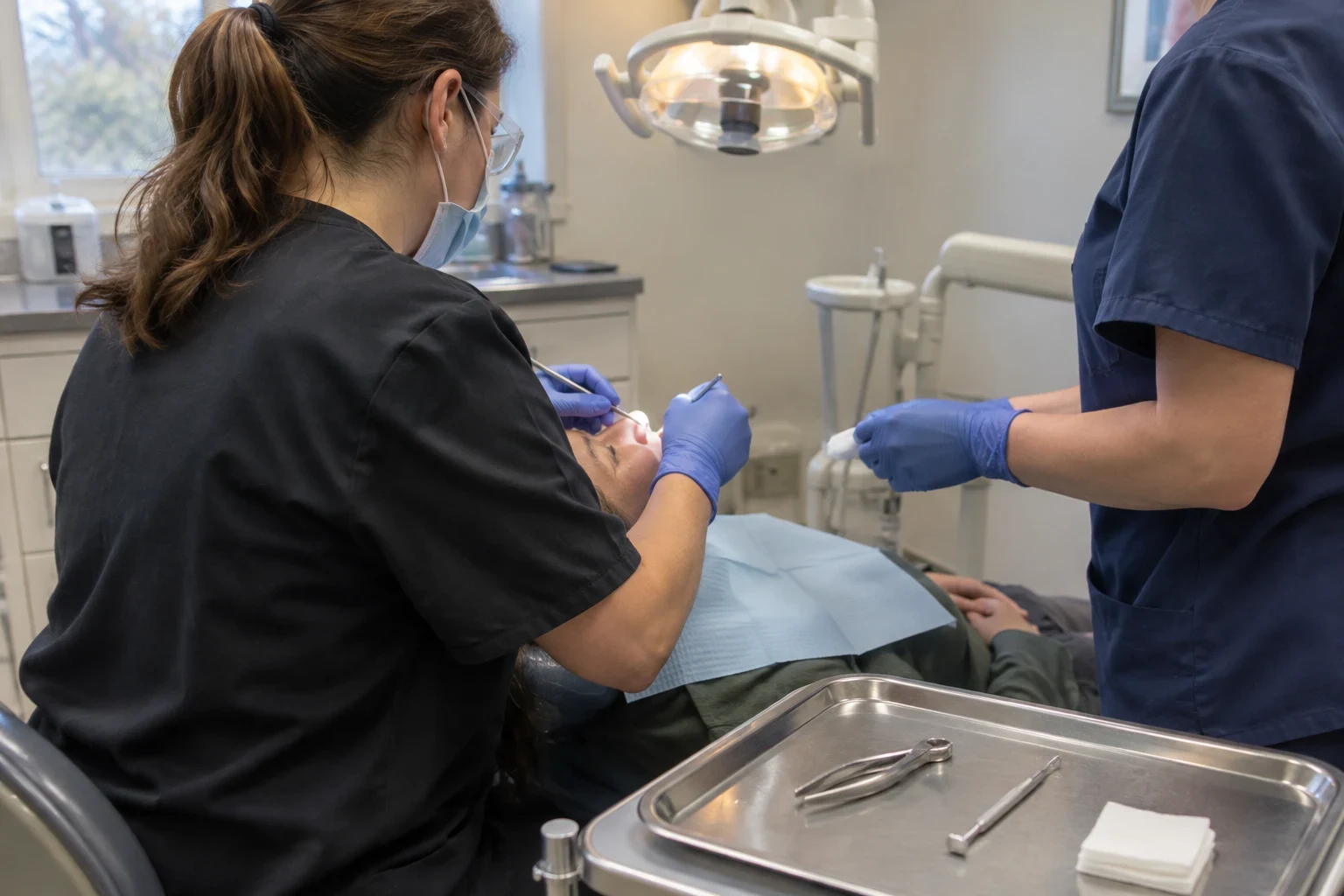
When removing a tooth is the right call
We start from the goal of keeping your natural teeth. A filling or a crown can rebuild a great deal of damage, so we suggest an extraction only when a tooth can't be restored with a fair chance of lasting. Usually that means decay has spread below the gumline, a crack has run down into the root, infection has eaten away the bone holding the tooth, or the jaw has no room for it.
We treat each patient the way we'd want a neighbor treated. You see the X-ray, we point out what we find, and you get a plain answer about saving or removing the tooth. If keeping it is realistic, we tell you so, even when pulling it would be faster.
We see people from all over Webster, along with Oxford, Dudley and Charlton, both for routine removals and for teeth that have been nagging at them for months.
What your extraction visit includes
X-ray of the full root
The image shows the entire root and the bone that supports it. Root shape and curvature, plus how close the tip sits to the sinus or the lower jaw's nerve canal, guide how we plan the removal.
Thorough local anesthetic
We numb the tooth, its ligament and the surrounding gum, then test the area before we begin. You should feel pressure while the tooth comes out, not sharp pain.
Controlled removal
An elevator loosens the periodontal ligament holding the root, and forceps guide the tooth out with slow, steady pressure. A molar with several roots may be divided so each root comes out on its own path, sparing the surrounding bone.
Finishing the site
Before you head home, we rinse out the empty socket, check that every piece of root is gone and set gauze in place so a solid clot forms. Some sites get a few stitches to close the gum.
Written aftercare and a follow-up plan
You leave with printed instructions for the first few days. We also talk about whether the space should be filled with a bridge later or simply left to heal.
When a tooth may be past saving
A split running into the root
A vertical fracture that extends below the gumline can't be sealed by a crown. Bacteria move into the crack, and the tooth often hurts as you bite and then release.
Decay too deep to rebuild
Once a cavity has taken so much tooth that a crown would have nothing firm to hold onto, removal is often the honest recommendation.
Swelling or a gum pimple
A bump on the gum that drains, a bad taste that keeps returning, or puffiness around one tooth often points to an abscess. If the infection has broken down the bone that supports the tooth, it may not be possible to keep it.
A loose tooth
Advanced gum disease can erode the bone around a root until the tooth shifts when you touch it. Past a certain point, it can't be firmed up again.
Wisdom teeth with no room
A third molar that only partway erupts leaves a gum flap that traps food, which can lead to inflammation or decay in the molar just ahead of it.
How extraction day goes
- 1
Review and consent
We go through your health history and medications, blood thinners in particular, and then study the X-ray with you. Before anything begins, you'll know which tooth is coming out and the reason.
- 2
Numbing
A numbing gel goes on the gum first so the injection feels gentler. We then wait several minutes for the anesthetic to take full effect. If anything feels sharp, raise your hand and we'll add more.
- 3
Removal
Once the area is numb, most simple extractions are finished in a few minutes. If the X-ray shows an impacted tooth or roots near the nerve that a specialist should handle, we say so before starting and help you arrange the referral.
- 4
Clot protection and aftercare
You bite on gauze for about 30 to 45 minutes. For several days, avoid straws, smoking and forceful spitting, because suction can dislodge the clot and leave bone exposed, a painful problem called dry socket. Gentle warm salt-water rinses can begin the next day.
What moves the price of an extraction
You hear the fee for your extraction before any work starts, so the bill matches what we discussed. Most of the cost comes down to how the tooth has to be removed. Our office works with most dental insurance plans. Patients without insurance can look at our Office Dental Plan, and the CareCredit Patient Payment Plan offers a way to spread out payments.
- Straightforward or sectioned
- A tooth with one root that stands fully above the gum needs fewer steps and less chair time. A multi-rooted molar that has to be divided, or a tooth broken off level with the gum, needs more.
- How much imaging it takes
- Most extractions are planned from a standard X-ray. If a root sits near the nerve canal or the sinus floor, we may need a more detailed image first.
- What your plan covers
- Dental plans handle extractions in different ways, and how much of your yearly maximum is left also plays a part. We look up your benefits and tell you the portion you can expect to pay.
- Filling the gap later
- Leaving the space open costs nothing today, though a missing back tooth allows its neighbors to drift. If you decide on a bridge down the road, it gets its own treatment plan and its own estimate.
Questions about extractions
Something not covered here? (508) 938-8976
Will it hurt?
The anesthetic shuts down pain signals during the removal, so most patients feel firm pressure, not pain. Plan on some tenderness for two or three days afterward. Over-the-counter pain relievers usually manage it, and we'll suggest ones that fit your health history.
How long until I'm healed?
After a simple extraction, the gum typically seals over within a week or two. The bone beneath it takes several months to fully rebuild. Most people are back at work or school the following day.
Can you save the tooth instead?
Often, yes. When enough healthy structure remains, a filling or a crown can keep the tooth working for years. We'll show you the X-ray and explain both paths so the choice is yours.
Do I need to replace a pulled tooth?
A front tooth nearly always needs a replacement. A gap where a back molar used to be lets the neighboring and opposing teeth tilt and shift, which changes how you bite. A bridge is one way to close the space, and we can talk it through at your follow-up.
Do you remove baby teeth?
Yes. A baby tooth sometimes decays badly or refuses to loosen while the adult tooth erupts behind it. Our Kids' Dentistry page describes how we keep those visits calm for children.

Get that sore tooth looked at
Tell us what you're feeling, and we'll find you a time for an exam and X-ray. You'll leave knowing whether the tooth can stay and what each option involves.